Online or onsite, instructor-led live OpenShift training courses demonstrate through interactive discussion and hands-on practice how to install, configure, and manage OpenShift Platform Container.
OpenShift training is available as "online live training" or "onsite live training". Online live training (aka "remote live training") is carried out by way of an interactive, remote desktop. Luxembourg City onsite live OpenShift trainings can be carried out locally on customer premises or in NobleProg corporate training centers.
OpenShift is also known as OpenShift Container Platform.
NobleProg -- Your Local Training Provider
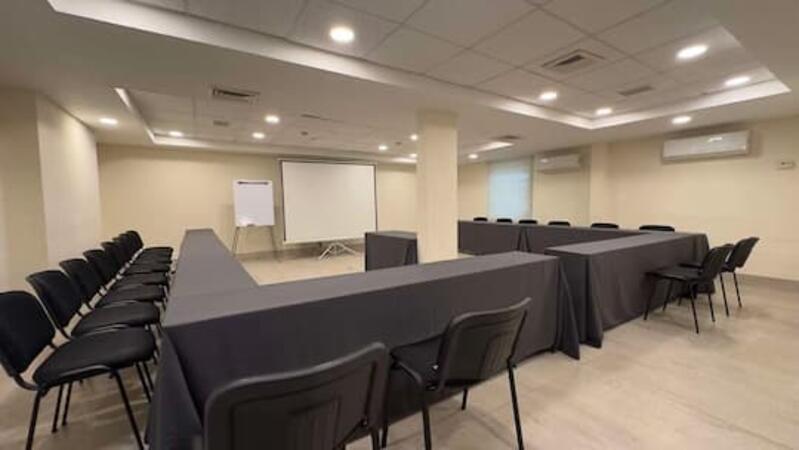
Luxembourg, Place de la Gare
Best Western Hotel International, 20-22 Place De La Gare, Luxembourg City, Luxembourg, 1616
The financial center and the touristic sites are really close.
Easy access to The EU-district and the International Airport Findel-Luxembourg by public buses.
Learn the fundamentals of containers, Kubernetes and OpenShift in a practical, hands-on training designed for developers, DevOps engineers and IT professionals. Participants will learn how to build containerized applications, deploy workloads, manage Kubernetes resources and use OpenShift to streamline modern application delivery in cloud and hybrid environments.
Learn how to build, deploy and administer containerized environments using Docker, Kubernetes and OpenShift. This five-day, hands-on training covers container images, Kubernetes workloads, cluster networking, storage, security, monitoring and practical OpenShift administration. Participants gain the skills needed to operate modern container platforms and troubleshoot applications across development and production environments.
OpenShift is one of the leading Kubernetes-based platforms for deploying and managing containerized applications in cloud, hybrid and on-premises environments.
This hands-on training teaches participants how to install, administer and troubleshoot OpenShift clusters while applying security, networking and storage best practices. Through practical exercises, participants gain the skills needed to confidently manage production-ready OpenShift environments.
Learn how to develop, deploy and manage containerized applications with OpenShift, one of the leading Kubernetes-based platforms for cloud-native development. This practical training covers application deployment, containers, networking, CI/CD and DevOps workflows, giving participants the skills to build and maintain modern applications in production environments.
Read more...
Last Updated:
Testimonials (4)
basic understanding of container/kubernetes and how they interact
features of the openshift plattform
Eric Scholze - NOW IT GmbH
Course - Introduction to Containers, Kubernetes & OpenShift
The availability of the virtual desktop as form of sandbox for the participants to tinker with is great!
Benedict - Questronix Corporation
Course - OpenShift 4 for Administrators
lost of hands on excercises (labs)
Seba - Robert Bosch Sp. z o.o
Course - OpenShift 4 for Developers
Reda explanations and he simplified alot of the understanding
Eric Van Wyk
Course - Docker, Kubernetes and OpenShift 3 for Administrators
Online OpenShift Container Platform training in Luxembourg City, OpenShift Container Platform training courses in Luxembourg City, Weekend OpenShift Container Platform courses in Luxembourg City, Evening OpenShift Container Platform training in Luxembourg City, Red Hat OpenShift instructor-led in Luxembourg City, OpenShift Container Platform on-site in Luxembourg City, OpenShift instructor in Luxembourg City, OpenShift Container Platform classes in Luxembourg City, OpenShift Container Platform coaching in Luxembourg City, Evening OpenShift courses in Luxembourg City, Red Hat OpenShift one on one training in Luxembourg City, Red Hat OpenShift private courses in Luxembourg City, Red Hat OpenShift boot camp in Luxembourg City, Online OpenShift training in Luxembourg City, OpenShift trainer in Luxembourg City, Weekend OpenShift training in Luxembourg City, Red Hat OpenShift instructor-led in Luxembourg City